How Open Mic Communities Work for Performers
Discover how open mic communities work for performers. Learn to leverage stage time, feedback, and relationships for your growth.
How Open Mic Communities Work for Performers
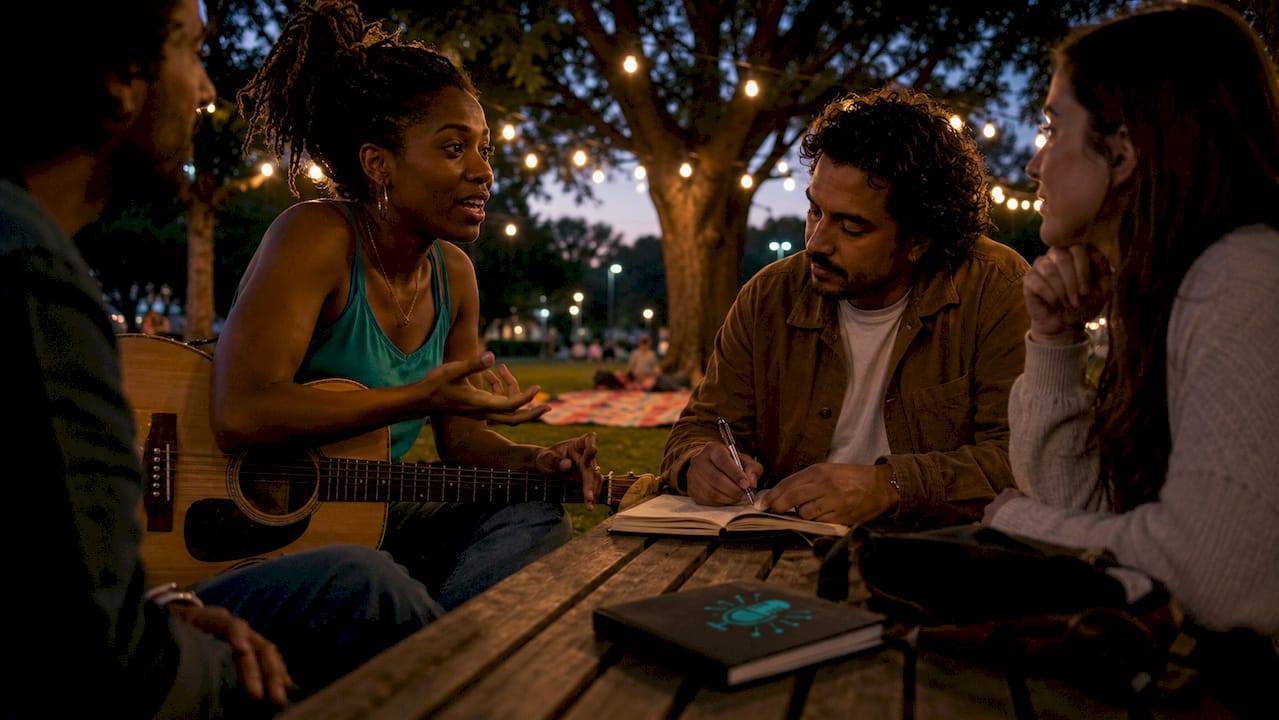
Open mic communities are structured performance ecosystems where every performer gets equal, timed stage time, managed by a host who keeps the night running. Whether you’re a comedian workshopping new material, a poet testing a fresh piece, or a musician playing to a room for the first time, understanding how open mic communities work is the difference between showing up once and actually building something. These nights are free or low-cost for both performers and audiences, which means the currency isn’t cash. It’s stage time, feedback, and relationships.
How do open mic communities work?
Open mic communities operate on one core principle: equal access. No headliners, no gatekeepers deciding who’s “ready.” Every performer who signs up gets the same shot. Hosts and MCs run the night by managing format, introducing performers, and timing acts, usually between 5 and 15 minutes depending on the event type. That structure is what keeps things fair and keeps the energy moving.
The community part kicks in around the edges of the stage time itself. Performers watch each other, give feedback, swap stories at the bar, and slowly build a network that matters more than any single set. Open Mic Search was built around exactly this reality: the stage is just the starting point.
What is the typical flow of an open mic event?
Most open mic nights follow a predictable structure, which is actually good news for newcomers. Here’s how a typical night runs:
Doors open and sign-ups begin. Sign-ups can fill within the first 10 minutes, so arriving early is non-negotiable. Some venues use paper lists; others use digital platforms or apps.
The host kicks things off. The MC sets the tone, explains the rules, and warms up the crowd. A good host is half the show.
Performers take the stage in order. Comedy sets typically run 5 to 10 minutes. Music and poetry sets run closer to 10 to 15 minutes. The host introduces each performer and keeps transitions tight.
Time signals go out. Hosts use mechanical cues like flashing lights at specific minute marks to warn performers their time is almost up. Think of the host as the bad guy with the light timer. They’re not trying to cut you off. They’re trying to keep 15 other performers from hating you.
Post-show mingling. The real networking happens after the last act. Staying after your set to clap for others and connect with the room is how strangers become regulars.
Pro Tip: Show up at least 30 minutes before the listed start time. Slots fill fast, and being early signals to the host that you’re reliable, not just someone passing through.
How do performers become recognized members within open mic communities?
Recognition in an open mic community is earned, not given. The path looks roughly like this:
First appearance. You’re unknown. The host reads your name off a list. The crowd gives polite applause. That’s fine. Everyone starts here.
Regular presence. After 8 to 12 weeks of consistent attendance, hosts and other performers start recognizing you. You become a face, not just a name.
Gaining recognition. The host starts introducing you as a regular. Other performers seek you out before the show. You’re part of the fabric now.
Paid offers. Regular performers often receive paid gig offers within 3 to 6 months of consistent participation. Hosts notice who shows up, who respects the room, and who the crowd responds to.
The single biggest mistake new performers make is treating open mics like auditions. They perform, then bolt. That signals to everyone in the room that you’re only there for yourself. Hosts are gatekeepers for future paid opportunities. They want reliable, community-minded performers, not one-and-done visitors.
Pro Tip: Track your sets and note what landed and what didn’t. Open Mic Search has a set tracking feature that helps you spot patterns across multiple nights, which is far more useful than relying on memory alone.
Building relationships with other performers is just as valuable as building a relationship with the host. Collaborations, referrals, and co-bills often come from the people standing next to you at the back of the room, not from the person behind the mic stand.
What are the common rules and etiquette performers should follow?
Open mic etiquette is mostly unspoken, but breaking it has very spoken consequences. Here’s what actually matters:
Respect the time limit. Overrunning your set can get you barred from future shows. When the light flashes, you wrap up. No exceptions, no “just one more bit.”
Stay for other performers. Leaving right after your set is noticed. It tells the host and the room that you don’t value what they’re doing. That reputation sticks.
Applaud genuinely. Even if the act before you was rough, clap. The room feeds off collective energy, and you benefit from that same energy when you’re up there.
Don’t complain about your slot. If you got bumped or placed last, handle it professionally. Hosts remember who makes their night harder.
Seek feedback from peers, not the host. Hosts are focused on pacing and professionalism, not career coaching. Your fellow performers are the ones who will give you honest notes.
The community mindset beats the entitlement mindset every single time. Performers who treat open mics as a shared space, rather than a personal showcase, are the ones who get called back.
How do open mic communities benefit performers beyond stage time?
The benefits of open mic participation extend well past the few minutes you spend at the microphone. Here’s a direct comparison of what you get from open mics versus private rehearsal:
Benefit Open mic participation Private rehearsal
Audience feedback Live, real-time reactions None
Networking Hosts, performers, and fans None
Stage presence Practiced under pressure Practiced in comfort
Career opportunities Paid gigs, collaborations None
Skill development Accelerated by live stakes Slower, no external input
Real audience feedback accelerates performer development faster than any amount of solo practice. A joke that kills in your bedroom might die on stage, and you need to know that. Open mics give you that information quickly and cheaply.
The networking angle is underrated. Poets get invited to literary events. Comedians get referred to club bookers. Musicians land support slots. These connections come from the people you meet at open mics, not from cold emails or social media posts. Building local visibility organically through consistent open mic appearances creates a fanbase that actually shows up, because they already know you from the room.
Key Takeaways
Open mic communities reward consistent, community-minded performers with real audience feedback, host recognition, and paid opportunities that private rehearsal cannot replicate.
Point Details
Equal stage access Every performer gets the same timed slot, regardless of experience level.
Consistency builds recognition Attending regularly for 8 to 12 weeks transforms you from unknown to valued regular.
Etiquette drives bookings Respecting time limits and staying for other acts directly influences future opportunities.
Feedback accelerates growth Live audience reactions teach performers faster than any solo practice session.
Post-set time counts Networking after your set is as important as the performance itself for career building.
The part nobody tells you about open mics
Here’s something I’ve noticed after years of watching performers come and go from open mic nights: the ones who treat the post-set time as part of their “performance” are the ones who actually stick around long enough to get paid.
Most performers think the job ends when they leave the stage. It doesn’t. The 45 minutes after your set, when you’re clapping for strangers and chatting with the host between acts, that’s where the real career gets built. Treating your entire night as part of your professional presence is the single most underrated piece of advice in this space.
I’d also push back on the idea that open mics are just for beginners. Experienced performers use them to test new material, stay sharp, and maintain community ties. The comedian who shows up to a Tuesday night open mic after years of paid gigs isn’t slumming it. They’re doing the work. That mindset is worth borrowing.
One more thing: learning pacing and stage transitions matters as much as the material itself. You can have the best poem in the room and still lose the crowd if you don’t know how to move between ideas. Open mics are where you figure that out, in real time, with a real audience.
— Adam Waddle
Ready to find your next open mic night?
Open Mic Search makes it genuinely easy to find open mic events near you, filter by night and location, and track your sets over time. No more scrolling through outdated Facebook groups or showing up to a venue that switched nights three months ago.
Performers can use Open Mic Search to browse open mic events near you, check host info, and sign up before slots fill. Hosts get free listing tools, digital sign-up lists, and performer timers that keep nights running without the chaos. Whether you’re stepping on stage for the first time or looking to expand your presence across multiple cities, Open Mic Search puts the right information in front of you, fast.
FAQ
What is an open mic community?
An open mic community is a group of performers, hosts, and audience members who regularly gather at open mic events to share work, give feedback, and build connections. Participation is open to all skill levels, and the community grows through consistent attendance and mutual support.
How long are sets at open mic nights?
Comedy sets typically run 5 to 10 minutes, while music and poetry sets run closer to 10 to 15 minutes. Hosts enforce these limits strictly, and overrunning can affect your chances of being invited back.
How do I get recognized at open mics?
Consistent attendance over 8 to 12 weeks is the most reliable path to recognition. Hosts and fellow performers begin to see you as a regular, which often leads to longer slots and paid opportunities within a few months.
Do performers get paid at open mics?
Open mic performers are generally unpaid. The value comes from stage time, live feedback, skill development, and networking connections that can eventually lead to paid bookings.
What is the biggest mistake new performers make at open mics?
Leaving immediately after your set is the most common mistake. Staying to watch other acts and connect with the room signals that you’re a community member, not just someone passing through, and that distinction matters to hosts.
Recommended
Role of Location Filters at Open Mic Events — Open Mic Search
Blog — From the Stage — Open Mic Search
How Musicians Transition from Open Mic to Gigs — Open Mic Search
Blog — From the Stage — Open Mic Search