Types of Open Mic Venue Setups: A Performer's Guide
Discover the types of open mic venue setups that enhance performer-audience engagement. Choose the right format for your next event!
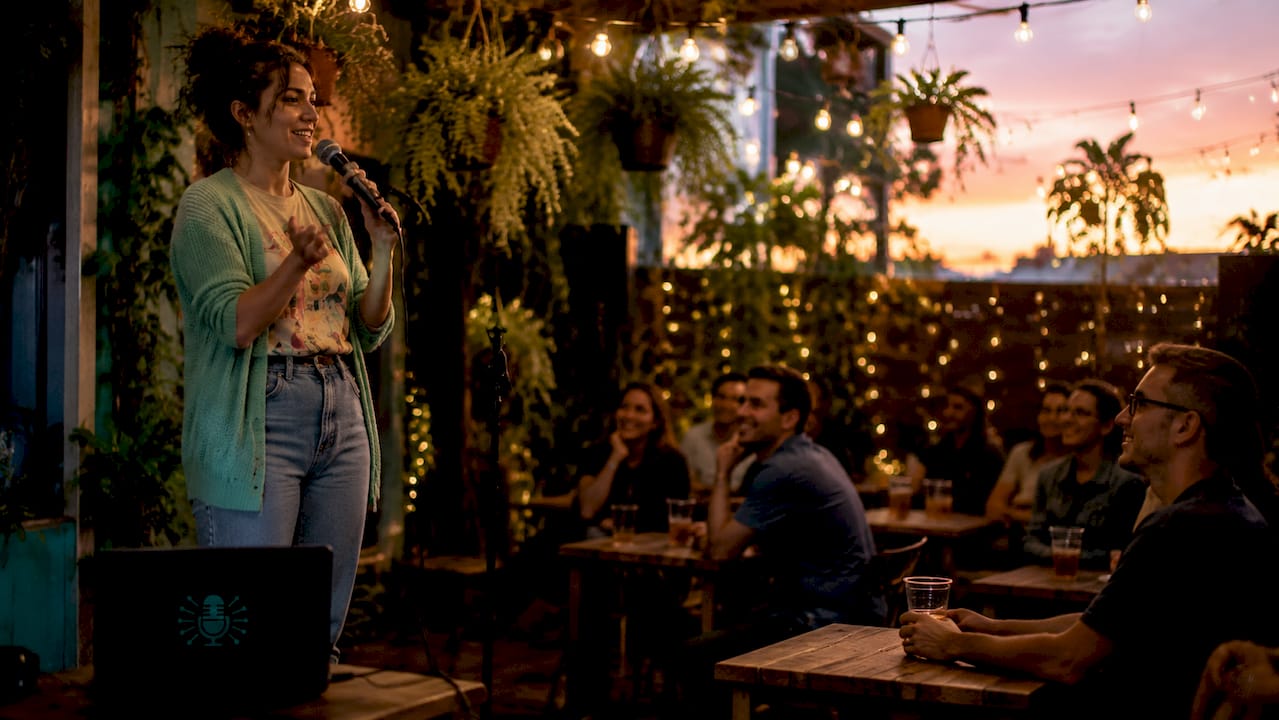
Types of Open Mic Venue Setups: A Performer’s Guide
Types of open mic venue setups refer to the structural formats and operational configurations that define how performers engage with audiences and how events flow, ranging from curated show-like settings to open rehearsal-style environments. Whether you’re a comedian testing new material at a dive bar or a host trying to keep 40 people entertained on a Tuesday night, the setup you choose shapes everything. Get it right and the room hums. Get it wrong and you’re watching performers bomb in silence while the bartender judges you. This guide breaks down every major setup type so you can pick the one that actually fits your goals.
1. What are the main types of open mic venue setups?
Open mic venue setups fall into five primary categories, each built around a different relationship between performer, audience, and host. Knowing which category you’re working in before you walk through the door saves everyone a lot of awkward silence.
Show-like comedy open mic. This format runs like a polished production. The host curates a lineup, places stronger performers earlier to build momentum, and treats the audience as the priority. Think of it as a real show that happens to feature unknowns.
Comics-only rehearsal room. No real audience, just other comedians waiting their turn. Lineup order matters less here because the room functions as a practice space, not a performance. Great for testing raw material without the pressure of civilian judgment.
Music open mic. Attendees sign up on arrival and receive a timed slot, typically 2 to 3 songs within 10 to 15 minutes. The venue supplies house mics and a PA system. Performers bring their own instruments, stands, and pedals. The format rewards preparation and punishes the person who shows up with a 20-minute acoustic set.
Blind audition format. Performers are concealed behind a screen or curtain. The audience votes based purely on sound before a reveal. This setup adds production complexity but creates a genuinely compelling experience for the crowd.
Bringer show. Performers earn stage time by recruiting 3 to 5 audience members to attend. Clubs use this model to guarantee ticket and drink revenue. It’s transactional, but it works for venues that need bodies in seats.
Pro Tip: If you’re a host deciding between a show-like format and a rehearsal room, ask yourself one question: who is the primary customer tonight, the audience or the performer? Your answer determines your entire lineup strategy.
2. How audience environment and venue size influence open mic setups
Room size is not just a logistical detail. It actively changes what setups are even possible and what the audience will tolerate.
Venue type Typical audience size Best suited setup Key consideration
Café or coffee shop 20 to 30 people Music open mic or casual comedy Intimacy favors conversational sets
Comedy club 40 to 80 people Show-like comedy open mic Pacing and lineup order become critical
Large bar or theater 80 to 150 people Blind audition or curated show Production roles and sightlines matter more
Comics-only room 10 to 20 performers Rehearsal-style open mic No audience pressure, pure practice focus
Open mic audiences typically range from 15 to 60 people, with café events sitting closer to 20 to 30 and larger venues drawing bigger crowds on weekends. That range matters because a blind audition format that works beautifully in a 100-seat theater becomes logistically painful in a 25-seat coffee shop with no backstage area.
Intimate rooms reward performers who can work conversationally and make eye contact with the front row. Bigger rooms demand projection, stronger stage presence, and a host who can manage energy across a wider space. Acoustic considerations also shift dramatically. A café with exposed brick walls creates natural reverb that can make a single acoustic guitar sound gorgeous. That same reverb turns a comedy set into an echo chamber where punchlines get lost.
Green room and backstage availability is another factor hosts underestimate. Show-like formats and blind audition setups genuinely benefit from a holding area where performers can wait without disrupting the room. Rehearsal-style rooms rarely need one because the performers are the audience.
3. What operational roles and technical setups look like across formats
Every open mic format requires at least one person running the room. The more complex the format, the more roles you need to fill before the first performer takes the stage.
Host or MC. The host manages lineup order, introduces performers, and keeps energy up between sets. In show-like formats, the host is essentially a producer making real-time decisions about pacing.
Soundboard operator. Resetting levels between acts is non-negotiable. A dedicated sound tech reverts to baseline settings before each performer so the next act doesn’t inherit a muddy mix from the previous one. This single role separates professional-feeling events from chaotic ones.
Timekeeper. Comedy open mics use light cues at the 4-minute mark of a 5-minute set to signal performers to wrap up. This prevents the awkward overrun without anyone having to physically intervene. The light is the bad guy with the timer, not the host.
Stage manager. Needed in blind audition formats and larger shows. The stage manager coordinates performer movement, manages the reveal mechanics, and keeps the show on schedule behind the scenes.
Crowd wrangler. In formats with audience participation or voting, someone needs to manage crowd energy, distribute ballots or QR codes, and collect results without killing the room’s momentum.
Equipment division follows a consistent pattern across most formats. The venue provides house microphones and PA systems. Performers supply their own instruments, cables, and personal gear. Hosts who communicate this clearly before the event eliminate 80% of setup confusion on the night.
Pro Tip: Coach every first-timer on mic placement before they hit the stage. Placing the mic 2 to 6 inches from the mouth, level with the floor, takes 10 seconds to explain and dramatically improves audio consistency for the entire room.
4. How blind auditions and bringer shows differ in setup and experience
These two formats sit at opposite ends of the production spectrum, but both require deliberate planning that standard open mic setups don’t demand.
Blind audition format
The blind audition setup hides performers behind screens or curtains so the audience evaluates sound before seeing the performer. The reveal moment is the emotional payoff. This format works best in larger venues where the screen doesn’t feel like a folding table with a bedsheet draped over it. Adding complex mechanics like this requires scaling operational roles and tightening show flow, especially as audience size grows.
Bringer show format
Bringer shows flip the standard open mic model. Instead of just showing up and signing up, performers must recruit a minimum number of paying audience members to earn their stage time. The club guarantees revenue. The performer gets a few minutes on stage. It’s a trade.
Feature Blind audition Bringer show
Primary goal Audience entertainment and discovery Venue revenue and performer exposure
Setup complexity High (screens, reveal mechanics, voting) Low to medium (sign-up tracking, door management)
Performer experience Pressure-free performance, high reveal drama High recruitment pressure, standard performance
Audience engagement Active voting and reveal anticipation Passive viewing, social group dynamic
Roles required Stage manager, crowd wrangler, timekeeper Host, door person, sign-up manager
Both formats have real benefits for hosts willing to commit to the operational requirements. Blind auditions create memorable events that audiences talk about afterward. Bringer shows solve the empty-room problem that kills most Tuesday night comedy events.
5. What hosts and performers should consider when choosing a setup
Picking the right setup is less about what sounds cool and more about what your actual resources can support.
Match the format to your primary goal. A rehearsal-style room serves performers who need reps. A show-like format serves an audience that paid to be entertained. Mixing these goals without acknowledging the tension creates events that satisfy nobody.
Audit your facility honestly. A blind audition format needs physical space for concealment, a reveal area, and enough room for the audience to see both. If your venue is a narrow bar with 15 seats, that format will feel like a school play, not a production.
Consider your staffing reality. A single host running sound, managing the lineup, and keeping time simultaneously is a recipe for chaos. Lineup and pacing decisions need to align with whether the mic is a show or practice environment, and that alignment requires someone with enough bandwidth to actually execute it.
Plan your audience engagement strategy. Intimate formats thrive on crowd interaction. Larger formats need structured engagement mechanics like voting, Q&A windows, or themed nights to keep people from checking their phones.
Budget for complexity before committing to it. Bringer shows and blind auditions both require more coordination than a standard sign-up format. If you can’t staff the roles or source the equipment, start with a music or comedy open mic and build from there.
Key takeaways
The best open mic venue setup is the one that matches your format to your audience size, operational capacity, and primary goal, whether that’s performer practice or audience entertainment.
Point Details
Format determines everything Choose show-like, rehearsal, music, blind audition, or bringer based on your primary goal.
Room size shapes setup options Café crowds of 20 to 30 suit casual formats; larger venues unlock blind auditions and curated shows.
Soundboard resets are non-negotiable A dedicated operator reverting to baseline between acts keeps audio consistent all night.
Light cues protect pacing A 4-minute light signal on a 5-minute set prevents overruns without confrontation.
Staffing limits complexity Match your operational roles to your actual team before committing to high-production formats.
What I’ve learned from watching setups succeed and fail
By Adam Waddle
The single biggest mistake I see hosts make is choosing a format based on what they’ve seen at a famous venue rather than what their actual room can support. A blind audition setup at a 200-seat club in New York is a spectacle. The same setup in a 30-seat bar with one spotlight and no backstage is just confusing for everyone involved.
The second mistake is treating soundboard management as an afterthought. I’ve watched genuinely talented performers get undermined by inherited audio settings from the act before them. The soundboard reset discipline between acts is not glamorous work, but it’s the difference between a professional-feeling event and one that sounds like it was recorded in a parking garage.
My honest recommendation: start with the simplest format that serves your audience, run it well for three months, and then add complexity. A music open mic with clean sound and a host who actually talks to the crowd will outperform a poorly executed blind audition every single time. Build the foundation before you build the spectacle. And if you’re a performer trying to figure out which rooms to play, find the ones where the host clearly knows what kind of room they’re running. That clarity alone tells you everything about whether the night will be worth your time.
— Adam Waddle
Find your perfect open mic setup with Open Mic Search
Ready to put all of this into practice? Whether you’re a performer hunting for the right room or a host building your first event from scratch, Open Mic Search makes the process a lot less chaotic.
Open Mic Search lets performers find open mic events filtered by location, night, and format so you’re not showing up to a bringer show when you wanted a rehearsal room. Hosts get free listings, digital sign-up lists, and performer timers built right into the platform, which means you can actually focus on running a great event instead of managing a clipboard and a stopwatch simultaneously. It’s the operational backbone your open mic night has been missing.
FAQ
What are the main types of open mic venue setups?
The five primary types are show-like comedy open mics, comics-only rehearsal rooms, music open mics with timed slots, blind audition formats, and bringer shows. Each setup differs in lineup structure, operational roles, and the balance between performer practice and audience entertainment.
How many people typically attend an open mic night?
Open mic audiences typically range from 15 to 60 people, with café events averaging 20 to 30 and larger comedy or poetry venues drawing bigger crowds, especially on weekends.
What equipment does a venue need to provide for an open mic?
Venues are responsible for house microphones and PA systems, while performers supply their own instruments, cables, and personal gear. Hosts should communicate this split clearly before the event to avoid setup confusion.
How do hosts manage performance time limits at open mics?
Comedy open mics use light cues at the 4-minute mark of a 5-minute set to signal performers to wrap up, preventing overruns without requiring direct confrontation from the host.
What makes a blind audition open mic different from a standard setup?
A blind audition format conceals performers behind screens so the audience judges on sound alone before a reveal, requiring additional production roles like a stage manager and crowd wrangler that standard open mic formats don’t need.
Recommended
Find & Host Open Mics Near You — Open Mic Search