Why Post-Performance Feedback Helps Musicians Grow
Discover why post-performance feedback helps musicians excel. Gain insights on improving skills with valuable feedback tools and techniques.
Why Post-Performance Feedback Helps Musicians Grow
Post-performance feedback is defined as any structured evaluation of a musician’s work received after a live or recorded performance, and it is the single most reliable tool for accelerating musical growth. Most musicians practice hard but plateau fast. The reason is almost always the same: they are practicing without accurate information about what actually needs fixing. Understanding why post-performance feedback helps musicians means understanding the gap between what you think you sound like and what your audience actually hears. Tools like AI coaching platforms, recording software, and structured peer review programs all exist to close that gap. Research, including Hattie’s meta-analysis on feedback in learning, confirms that feedback has an average effect size of 0.73 on skill development. That number is nearly double the standard threshold for meaningful impact.
Why post-performance feedback helps musicians see clearly
Your brain is genuinely overloaded during a live performance. Musicians’ brains during live performance are managing motor control, emotional expression, audience awareness, and real-time memory recall all at once. That cognitive load leaves almost no bandwidth for accurate self-monitoring of pitch or timing. You feel like you nailed it. The recording tells a different story.
This is called the perception-reality gap, and it trips up players at every level. One well-known example is bone conduction: when you sing or play, you hear your own voice partly through the vibrations in your skull, which makes your tone sound fuller and more resonant to you than it does to anyone else in the room. That physical distortion alone explains why so many musicians are genuinely shocked the first time they hear themselves recorded.
Inexperienced self-assessment leads musicians to overestimate their pitch accuracy by 15–20%. That is not a small margin. It means the internal compass you are relying on during practice is consistently pointing in the wrong direction.
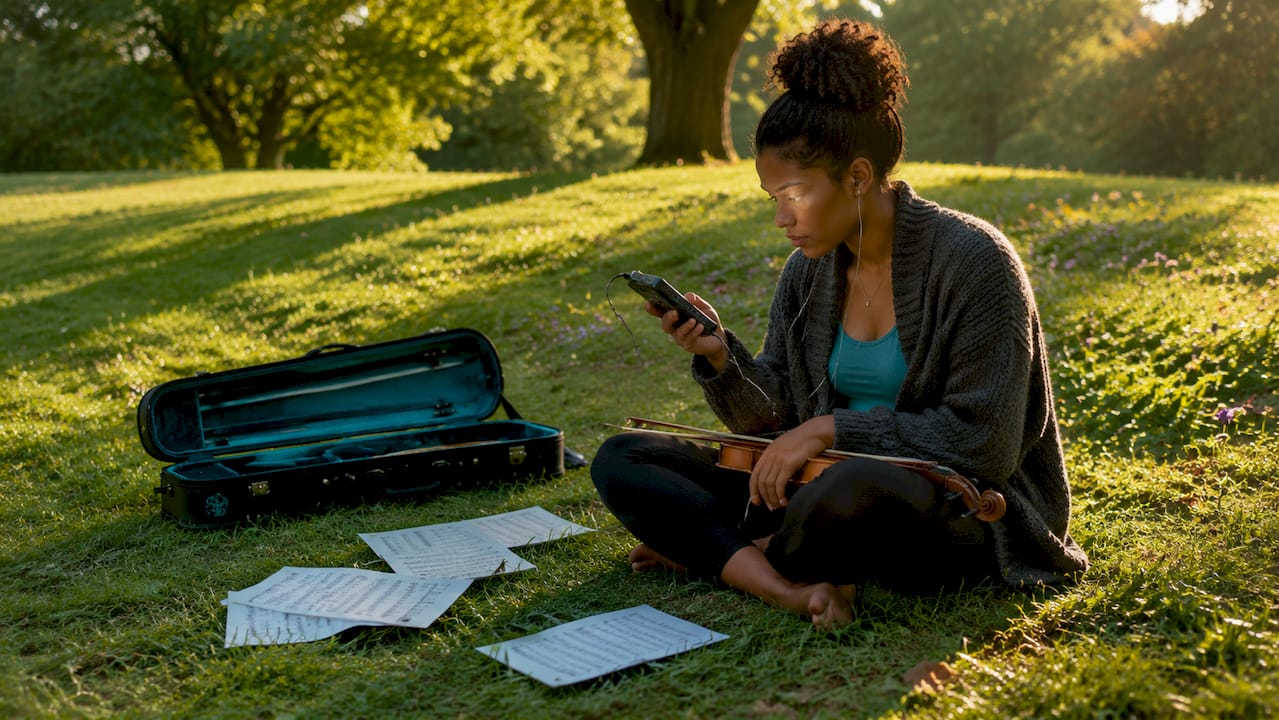
Recording yourself and listening back provides the third-person perspective your brain cannot generate in real time. Musicians using recorded audio feedback improve up to 40% faster than those practicing without recordings, even when total practice time is identical. The recording does not make you practice more. It makes every minute of practice count more.
Pro Tip: Record every practice session, not just performances. Even a phone propped against a music stand gives you enough audio to catch pitch drift, timing inconsistencies, and dynamic problems you would never notice in the moment.
What makes feedback actually work for musicians?
Not all feedback is created equal, and the difference between useful critique and empty praise is enormous. Feedback must precisely guide the next concrete action for the performer to benefit. “That sounded great” tells you nothing. “Your pitch dropped a half-step on the bridge in measures 12 through 16” tells you exactly where to go back and work.
Here are the four qualities that separate feedback that moves the needle from feedback that wastes your time:
Specificity. Feedback tied to exact moments, measures, or techniques gives you a target. Vague praise has negligible impact on improvement compared to targeted notes about specific pitch deviation or timing errors.
Timeliness. Feedback delivered within 24 hours of a performance is far more useful than notes delivered a week later. Memory of the physical sensations fades fast, and you need to connect the critique to what your body was doing.
Objectivity. Quantified data, like pitch deviation metrics from a tool such as Melodyne or timing analysis from a DAW like GarageBand or Logic Pro, removes personal bias from the equation entirely.
Behavioral focus. Good feedback describes what you did, not who you are. “Your bow arm tensed up during the transition” is behavioral. “You seem nervous” is not.
“Regular receipt of constructive feedback cultivates a growth mindset that views mistakes as critical learning data, reducing anxiety and improving focus.” — The Value of Feedback in Music Education
That shift in mindset is not a soft benefit. It is the mechanism that keeps you practicing through difficulty instead of quitting. When mistakes become data points instead of personal failures, you stop dreading the feedback session and start looking forward to it.
How to build a feedback-driven practice cycle
Knowing feedback matters is one thing. Building a system that actually uses it is another. The most effective approach is the record-analyze-improve cycle, and it works like this:
Record the performance. Use your phone, a USB microphone, or a dedicated audio interface. Quality matters less than consistency. Record every session.
Analyze within 24 hours. Listen back with a notepad. Mark timestamps where something felt or sounded off. Use pitch analysis software if you have access to it.
Identify the One Thing. Elite musicians spend 80% of their time analyzing and correcting discrepancies, not just playing. They target the single highest-impact correction first. Pick your biggest problem and work only on that until it is fixed.
Practice the correction in isolation. Slow it down. Loop the problem section. Do not run the whole piece until the specific issue is resolved.
Record again and compare. This closes the loop and gives you objective proof of progress, which is motivating in itself.
High-efficiency practice means short, focused sessions of 15–20 minutes, done 3–4 times per week, with quality feedback built into each one. Longer unstructured sessions produce far less improvement. Here is a simple weekly structure to follow:
Day Session Focus Duration
Monday Record and analyze previous performance 20 minutes
Wednesday Targeted correction of identified weakness 15–20 minutes
Friday Full run-through with recording 20 minutes
Weekend Optional: teacher review or peer feedback 30 minutes
AI coaching tools like those offered through platforms built around performance analytics can automate parts of the analysis phase, flagging pitch and timing issues without requiring a teacher in the room. That makes the cycle accessible even when you are practicing solo.
Pro Tip: Do not try to fix everything at once. Significant skill improvements can occur within 3–5 focused sessions targeting a single specific weakness. Patience with the process is what separates musicians who plateau from those who keep climbing.
How constructive criticism builds confidence and artistic identity
Here is the uncomfortable truth: most musicians avoid feedback because they are afraid of what they will hear. Musicians often avoid feedback fearing confidence loss, but that avoidance is exactly what keeps them stuck. The fear is understandable. The cost is too high.
The difference between destructive and constructive feedback comes down to intent and framing. Destructive feedback attacks the person. Constructive feedback attacks the problem. Learning to tell the difference is a skill, and it is one worth developing early.
Here is how to turn post-performance reviews into a confidence-building tool rather than a confidence-draining one:
Separate the feedback from your identity. Your performance is something you did, not something you are. A critique of your timing is not a critique of your worth as a musician.
Filter ruthlessly. Not all feedback deserves equal weight. A comment from a seasoned teacher carries more signal than an offhand remark from someone who has never performed. Effective filtering of critiques helps performers accept useful feedback while discarding unhelpful judgments.
Track your wins alongside your corrections. Every feedback session should include what you did well. Progress is motivating, and documenting it keeps you from feeling like you are always behind.
Use feedback to build your network. Open mic nights and performance communities are full of musicians at every level. Sharing feedback with peers builds relationships, and those relationships often lead to collaborations, gig referrals, and mentorship.
Feedback cultivates a growth mindset critical for resilience and artistic risk-taking. That is not just a feel-good idea. It is the psychological foundation that allows you to try new things on stage without the fear of failure shutting you down. You can learn more about building that resilience through consistent, structured critique over time.
Key takeaways
Post-performance feedback accelerates musical growth by closing the perception-reality gap and turning every practice session into a targeted, evidence-driven correction cycle.
Point Details
Feedback closes the perception gap Musicians overestimate pitch accuracy by 15–20%; recordings reveal the truth objectively.
Specificity drives results Vague praise has negligible impact; feedback tied to exact moments and measurable errors produces real change.
Short focused sessions beat long ones Practice 15–20 minutes, 3–4 times per week, with feedback built into each session for maximum gains.
The One Thing method works Target your single biggest weakness first; elite musicians spend 80% of their time analyzing, not just playing.
Mindset determines outcome Treating feedback as data rather than judgment builds resilience and keeps artistic growth moving forward.
The feedback loop i wish i had started sooner
I spent years thinking I was practicing smart because I was practicing a lot. Long sessions, lots of repetition, genuine effort. What I was missing was the mirror. The first time I seriously listened back to a recording of my own performance, it was genuinely humbling. The pitch issues I thought I had fixed were still there. The timing felt confident in the moment and sloppy on playback.
What changed everything was not a new technique or a better instrument. It was committing to the record-analyze-improve cycle every single week. Not sometimes. Every week. The improvement was not instant, but it was consistent in a way that years of unstructured practice never produced.
The thing most musicians get wrong about feedback is treating it as a verdict. It is not. It is a compass. A verdict tells you where you stand. A compass tells you where to go next. Once you make that mental shift, you stop dreading the playback and start craving it.
If you are performing at open mics or small venues, you already have access to one of the best feedback environments available. Real audiences, real acoustics, real reactions. The only question is whether you are capturing that information and using it. If you are not tracking your sets and reviewing what happened after each show, you are leaving the most valuable part of the performance on the table.
Start small. Record one performance this week. Listen back once. Write down one thing to fix. That is the whole system at its core. Everything else is just adding detail to that loop.
— Adam Waddle
Put your feedback to work at your next open mic
Open Mic Search is built for exactly this kind of growth. The platform lets you find open mic nights in your city, track your sets over time, and collect audience feedback through QR codes at the venue.
That means every performance becomes a data point, not just a memory. You can see which songs landed, which moments fell flat, and how your audience engagement changes as you apply what you learn. The performer tracking tools on Open Mic Search turn the feedback loop from a solo exercise into a community-supported system. Ready to find your next stage? Discover open mics near you and start building the performance record that actually shows your growth.
FAQ
Why can’t musicians accurately self-assess during a performance?
Musicians’ brains during live performance are managing motor control, memory, and emotional expression simultaneously, leaving almost no capacity for accurate self-monitoring. External feedback tools like recordings fill that blind spot.
How much faster do musicians improve with recorded feedback?
Musicians using recorded audio feedback improve up to 40% faster than those practicing without recordings, even with identical practice time. The recording shifts you into a listener role that your performing brain cannot access.
What is the difference between constructive and destructive feedback?
Constructive feedback targets specific, correctable behaviors tied to the performance. Destructive feedback attacks the performer’s identity or worth rather than the work itself.
How often should musicians seek post-performance feedback?
High-efficiency practice research supports 3–4 focused sessions per week with feedback integrated into each one. Consistency matters more than volume.
Does audience feedback at open mics count as useful performance feedback?
Yes. Audience reactions provide real-time data on engagement, timing, and emotional impact that recorded analysis alone cannot capture. Platforms like Open Mic Search let you collect and track that audience feedback systematically through QR codes at the venue.
Recommended
Blog — From the Stage — Open Mic Search
How Musicians Transition from Open Mic to Gigs — Open Mic Search
Blog — From the Stage — Open Mic Search
Find & Host Open Mics Near You — Open Mic Search